The Art of the Handwritten Touch: Why Bookish is Your New Go-To for Personalized Design
In a digital world that moves at breakneck speed, where everything is templated, automated, and often feels a bit sterile, there is a profound hunger for authenticity. We scroll past polished, vector-perfect graphics every day, but what stops us? What makes us pause, lean in, and actually feel something? Often, it’s the imperfect, human stroke of a pen. It’s the realization that a real person took the time to craft something specific for us. This is where Bookish comes into play—not just as another font file in your library, but as a bridge between the cold efficiency of modern technology and the warm, inviting nature of traditional craftsmanship.
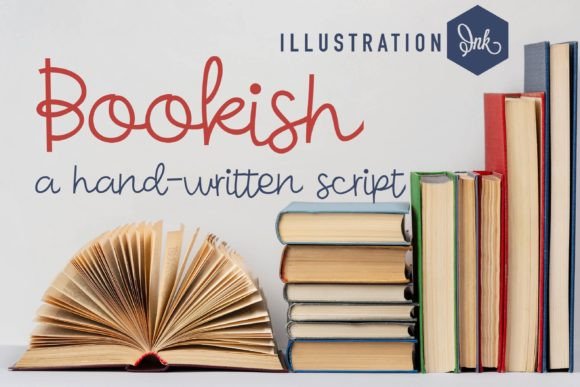
If you are a designer, a small business owner, or simply someone who appreciates the finer details of aesthetics, you know that typography does more than convey words; it sets the mood. Bookish isn’t trying to be serious. It doesn’t want to shout from the rooftops with bold, geometric sans-serifs. Instead, it whispers. It has an easy-going look and feel, a casual script that mimics the natural flow of handwriting without sacrificing readability. It is stylish, yes, but in a way that feels effortless, like you picked up a nice fountain pen and let your thoughts spill onto the page.
More Than Just a Font: A Versatile Design Tool
One of the most common mistakes people make when selecting a typeface is treating it as a decorative afterthought. But fonts are foundational. When you choose Bookish, you are choosing a versatile style that looks lovely across a wide spectrum of applications. Its strength lies in its adaptability. While it carries that distinct handwritten flair, it avoids the pitfalls of many script fonts that become illegible when scaled down or used in complex layouts.
Think about the last wedding invitation you received. Was it crisp and corporate, or did it feel like a personal letter from the couple? The difference often comes down to the choice of typeface. Bookish brings that "extraordinary" quality to projects that require a customized touch. It transforms standard text into something that feels curated and special. Whether you are designing a logo for a boutique coffee shop, creating thank-you cards for a new baby, or laying out a greeting card for a birthday, this font adds a layer of intimacy that printed serif or sans-serif fonts simply cannot replicate.
Where Bookish Shines
- Wedding Invitations: The organic curves of Bookish mimic the elegance of calligraphy without the rigid structure, making it perfect for romantic, soft-themed weddings.
- Thank You Cards: There is nothing quite like the feeling of receiving a note that looks hand-written. Bookish captures that sentiment instantly, making your gratitude feel genuine and heartfelt.
- Quotes and Social Media Graphics: In the age of Instagram and Pinterest, visual appeal is currency. Quotes overlaid on images with a handwritten font stand out in a crowded feed because they feel personal rather than promotional.
- Business Cards: For creative professionals—photographers, artists, florists—a business card designed with Bookish signals creativity and attention to detail before the client even meets you.
- Logos: If you are branding a lifestyle product, a home decor store, or a handmade jewelry line, Bookish provides that artisanal vibe that connects with consumers looking for authenticity.
The Psychology of Handwritten Typography
Why do we respond so positively to fonts that look like handwriting? It goes deeper than mere aesthetics. Psychologically, handwriting is associated with effort, care, and individuality. When we see text that resembles a human hand, our brains register it as more trustworthy and less transactional. This is crucial in marketing and design. We live in an era of spam emails and automated chatbots. A design element that breaks that pattern creates a moment of connection.
Bookish leverages this psychological trigger perfectly. Its casual, easy-going nature lowers the barrier to entry. It doesn’t intimidate the viewer. It invites them in. This is particularly effective for brands that want to appear approachable yet sophisticated. It strikes a delicate balance. It is not messy or chaotic; it is refined chaos. The letters have character, but they remain legible. This balance is what makes Bookish suitable for "every other design which needs a customized touch."
Practical Considerations for Implementation
While Bookish is incredibly versatile, using it effectively requires a bit of strategy. You don’t want to overuse it to the point where it loses its impact. Here are some practical tips for integrating this font into your workflows:
- Pairing is Key: Because Bookish has such strong personality, it works best when paired with simpler, neutral typefaces. Try pairing it with a clean sans-serif like Helvetica or a classic serif like Garamond for body text. Let Bookish be the headline or the accent, and let the other font handle the heavy lifting of information delivery.
- Whitespace is Your Friend: Handwritten fonts can feel busy if crammed together. Give Bookish room to breathe. Increase your line height (leading) and letter spacing (kerning) slightly to enhance readability and maintain that airy, elegant feel.
- Color Matters: Avoid stark black on white unless you are going for high contrast. Soft grays, deep navys, forest greens, or muted earth tones complement the natural feel of Bookish much better than harsh primary colors.
- Contextual Usage: Don’t use Bookish for long paragraphs of text. It is designed for short bursts—titles, headers, labels, and short phrases. Using it for body copy will fatigue the reader and defeat the purpose of its legibility.
Fitting Bookish into Modern Workflows
You might be wondering how this fits into your daily routine. Perhaps you run a small Etsy shop, manage social media for a local bakery, or are planning a major life event. In all these scenarios, Bookish saves time while elevating quality. Instead of hiring a calligrapher for every single piece of collateral, you can achieve a similar aesthetic digitally. This is a massive benefit for solopreneurs and small teams who need to produce high-quality materials quickly.
Consider the scenario of a wedding planner. They need to send out save-the-dates, menus, and place cards. Using Bookish allows them to maintain a consistent brand voice across all materials without breaking the bank. Or consider a blogger who wants their quote graphics to stand out. By using Bookish, they inject their personal brand identity into every post, fostering a stronger connection with their audience.
Furthermore, Bookish is adaptable to various mediums. It looks stunning in print, whether on thick cotton paper or glossy photo stock. But it also translates beautifully to digital screens. On mobile devices, where space is limited, the compact yet distinct shapes of Bookish ensure that your message is clear without taking up excessive screen real estate.
Choosing the Right Tone for Your Project
Not every project needs a handwritten feel. If you are designing a legal document, a technical manual, or a corporate financial report, Bookish would likely be inappropriate. Those contexts demand clarity, authority, and neutrality. However, for projects that aim to evoke emotion, celebrate milestones, or showcase creativity, Bookish is an exceptional choice.
It is important to assess the intent of your design before committing. Ask yourself: Do I want my audience to feel informed, or do I want them to feel connected? If it’s the latter, explore options like Bookish. Look at the occasion. Is it celebratory? Intimate? Creative? These are the domains where a casual, hand-written script thrives.
Final Thoughts on the Power of Personalization
We are seeing a shift in design trends away from the ultra-minimalist and towards the hyper-personalized. People crave experiences that feel tailored to them. Fonts are one of the simplest yet most powerful tools we have to create that sense of tailoring. Bookish, with its natural, stylish, and easy-going character, embodies this shift. It reminds us that design doesn’t have to be rigid to be professional. It doesn’t have to be loud to be heard.
Whether you are crafting a logo for a new venture, designing the perfect thank-you note, or just adding a splash of personality to a blog post, Bookish offers a customized touch that resonates. It bridges the gap between the digital and the analog, offering a solution that is both practical and profoundly human. So, the next time you open your design software, take a moment to step away from the default templates. Pick up the virtual pen. Try Bookish. You might just find that the extraordinary touches are the ones that leave the biggest impression.